
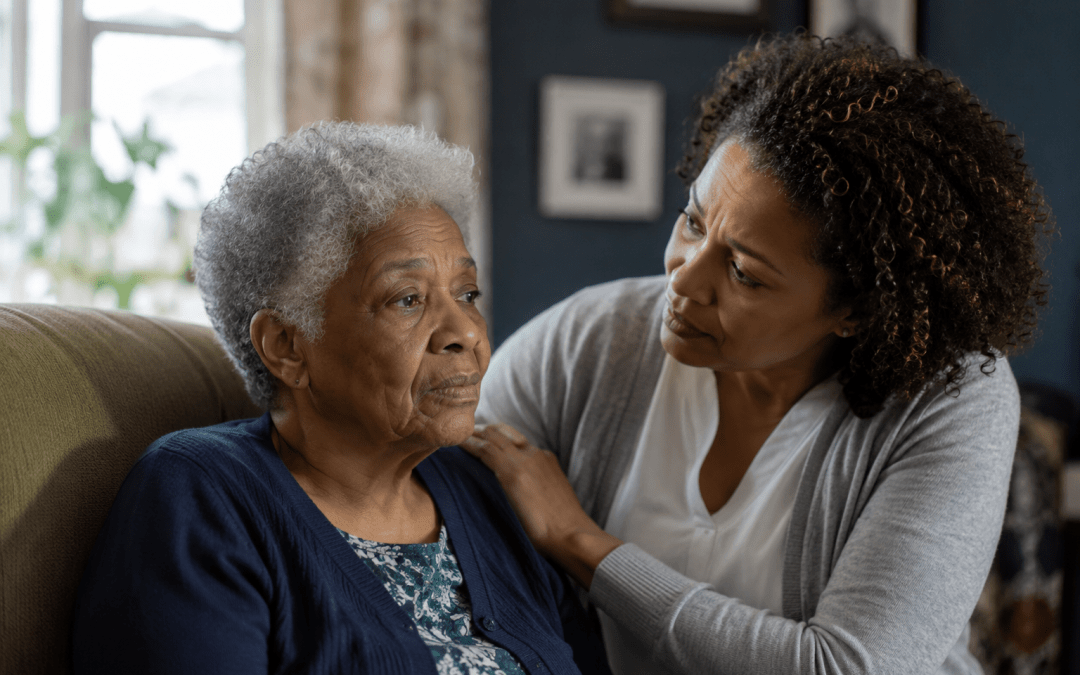
Susan visited her mother several times a week at the nursing home. She brought her favorite snacks, looked through family photo albums with her, and tried to stay involved in her care.
Most of the time, the nursing staff handled her mother’s bathing and personal care. One afternoon, however, the staff was running behind, so Susan offered to help her mother with a sponge bath.
What she discovered shocked her.
On the back side of her mother’s body was a painful wound surrounded by dark bruising. Her mother had complained about discomfort for weeks, but every time Susan asked about it, she was told that the pain was simply part of aging and reduced mobility.
Looking at the wound, Susan knew something wasn’t right. At first, she wondered if her mother had fallen. But there were no reports of a fall, no broken bones, and no explanation that seemed to fit what she was seeing. When she asked the nursing staff what had happened, she received a response that many families hear. “We’re not really sure how that got there.” Susan left the nursing home that day with more questions than answers.
Unfortunately, many nursing home abuse and neglect cases begin exactly this way. A family member notices something that doesn’t seem right and starts asking questions.
Unexplained Bruises and Injuries
One of the most common red flags of nursing home abuse is unexplained bruising or injuries.
While elderly individuals may bruise more easily than younger adults, family members should pay attention when bruises:
- Appear repeatedly
- Appear in unusual locations
- Are accompanied by cuts, wounds, or swelling
- Cannot be explained by staff
- Seem inconsistent with the explanation provided
Not every bruise is evidence of abuse or neglect. However, unexplained injuries should never be automatically dismissed.
Bedsores and Pressure Ulcers
The wound Susan discovered raised another concern.
Pressure ulcers, commonly called bedsores, develop when residents are not repositioned properly or do not receive adequate care. These wounds can become serious quickly and may lead to infection, hospitalization, or worse.
Family members should pay close attention to:
- Red or discolored skin
- Open wounds
- Areas of skin breakdown
- Complaints of pain while sitting or lying down
One of the reasons pressure ulcers are taken so seriously is that they are largely preventable in a skilled nursing facility. Residents who cannot move themselves rely on staff to reposition them regularly, monitor their skin, and intervene before a small problem becomes a serious wound. When a resident develops a significant bedsore, families have every right to ask difficult questions. In many nursing home abuse and neglect cases, pressure ulcers are not simply the result of aging—they are a sign that basic care may not have been provided.
Sudden Weight Loss or Dehydration
Another common warning sign of nursing home neglect is unexpected weight loss. Family members may notice:
- Loose-fitting clothing
- Weakness
- Fatigue
- Dry skin
- Increased confusion
Dehydration and malnutrition can develop when residents are not receiving appropriate assistance with meals or fluids.
Frequent Falls
Falls are one of the most common incidents reported in nursing homes. While some falls may be unavoidable, repeated falls can indicate a larger problem.
Questions families should ask include:
- Was the resident being properly monitored?
- Were fall-risk precautions being followed?
- Was the family notified?
- Has the resident experienced multiple falls?
- A pattern of falls may be a warning sign that additional investigation is needed.
Poor Hygiene and Unsanitary Conditions
Family members should also pay attention to a resident’s overall condition.
Potential warning signs include:
- Dirty clothing
- Soiled bedding
- Unwashed hair
- Strong odors
- Unsanitary living conditions
These issues may indicate inadequate staffing or failures in resident care.
Changes in Mood or Behavior
Not all signs of nursing home abuse are physical. Some residents become withdrawn, fearful, anxious, or unusually quiet. Others may seem nervous around certain staff members or suddenly refuse assistance from specific caregivers. Behavioral changes can sometimes be an important clue that something is wrong.
Staff Members Who Avoid Questions
A major red flag that is often overlooked is how the facility responds when concerns are raised. Most families understand that accidents can happen. What concerns many people is when staff members:
- Provide conflicting explanations
- Cannot explain injuries
- Avoid answering questions
- Fail to document incidents
- Become defensive when concerns are raised
Families deserve clear answers about the care their loved ones are receiving.
What to Do
A. Trust Your Instincts
Most nursing home abuse investigations do not begin with dramatic events. They begin when a son, daughter, spouse, or grandchild notices something that doesn’t seem right.
- A bruise.
- A wound.
- A sudden decline.
- An explanation that doesn’t make sense.
Family members often know their loved ones better than anyone else. If something feels wrong, it is worth asking questions and seeking additional information.
B. Reach Out to Another Medical Provider
If you are concerned about a loved one’s condition, consider seeking an evaluation from another medical provider. A physician, wound care specialist, or hospital staff member may be able to assess the injury, document its severity, and recommend appropriate treatment. An independent medical evaluation can also help answer questions about whether the injury appears consistent with the explanation provided by the nursing home.
C. Understand Your Legal Options
If your questions are not being answered or you suspect a loved one may have suffered nursing home abuse or neglect, it may be helpful to speak with an attorney who handles these cases. An attorney can review the circumstances, help determine whether records should be obtained, and explain the legal options that may be available. Even if you are unsure whether negligence occurred, understanding your rights can help you make informed decisions about protecting your loved one.
Protecting Loved Ones in Georgia Nursing Homes
Recognizing the red flags of nursing home abuse is often the first step toward protecting a vulnerable loved one. While not every injury or medical issue is the result of abuse or neglect, unexplained injuries, bedsores, repeated falls, weight loss, poor hygiene, and behavioral changes should never be ignored.
Concerned About a Loved One? Take the Next Step.
If you have noticed unexplained bruises, bedsores, repeated falls, sudden weight loss, or other warning signs of possible nursing home abuse or neglect, don’t ignore your concerns.
The Law Office of David Crawford helps Georgia families understand their rights when a loved one may have been harmed in a nursing home or long-term care facility.
To help us better understand your situation, please complete our online case evaluation form. The form allows you to provide details about your concerns, the injuries involved, and the care your loved one has received. Once we review the information, we can discuss whether additional investigation may be appropriate and what options may be available to help protect your loved one.
